The Fascinating History of Jewelry
The Fascinating History of Jewelry: From the Stone Age to Today
The history of jewelry dates back thousands of years and shows how styles, materials, and meanings have changed over time. Already in the Stone Age, people adorned themselves with shells and bones, while in antiquity, precious metals and gemstones were used to express power and prestige. Over the centuries, jewelry continuously evolved – from the elaborate Middle Ages to modern, sustainable designs. In this article, we delve deep into the history of jewelry and discover how jewelry became what it is today.
The Beginnings: Jewelry in the Stone Age
As early as 100,000 years ago, people began to adorn themselves with shells, bones, and stones. Archaeological finds from this period show that jewelry was not only worn for adornment but also as a protective amulet or status symbol. Pearl necklaces made from natural materials were particularly popular. In later periods, our ancestors discovered the art of carving and drilling to create jewelry from animal teeth, amber, and carved bones. These early pieces of jewelry often had spiritual meanings and served as talismans for good hunting or protection against evil spirits.
 Jewelry in the Stone Age
Jewelry in Antiquity
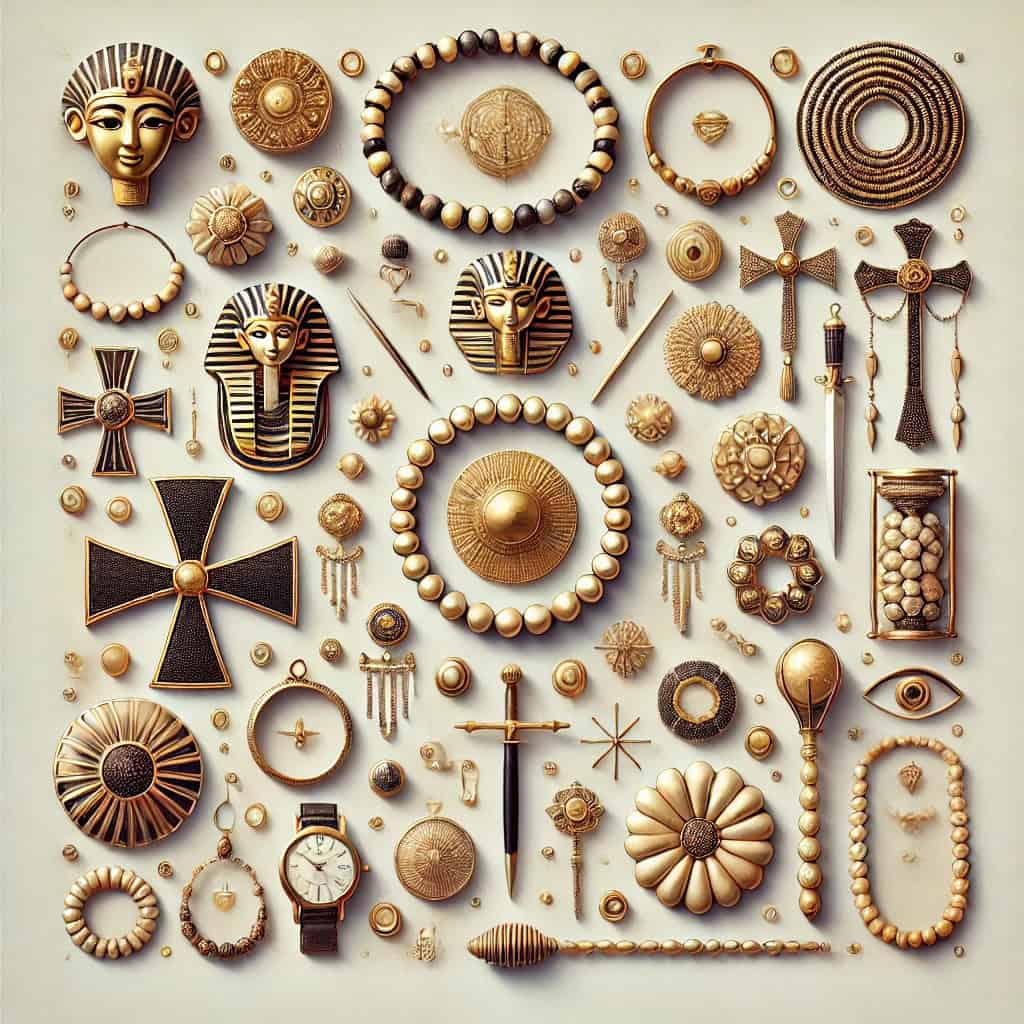
In the ancient civilizations of Egypt, Greece, and Rome, jewelry played an outstanding role. The Egyptians used gold and gemstones to represent religious and royal power. Famous pharaohs like Tutankhamun were buried with magnificent jewelry adorned with lapis lazuli, turquoise, and carnelian. Jewelry such as wide collars, scarab amulets, and intricately crafted rings symbolized wealth, protection, and connection to the gods.
The Greeks focused on elaborate designs with gemstones and processed gold into delicate jewelry. Motifs from mythology, such as laurel wreaths or depictions of gods and heroes, were common design elements. In Rome, jewelry was not only decorative but also a sign of rank and status. Roman women wore large, striking earrings, bracelets, and hairpins, often adorned with pearls and colored glass.
 Jewelry in Antiquity
Middle Ages and Renaissance: Symbolism and Craftsmanship
In the Middle Ages, jewelry was often worn as a religious symbol. Crosses, lockets, and rings with Christian motifs were widespread. Many pieces of jewelry were made of silver and gold and set with gemstones such as sapphire and garnet, which were believed to have protective powers. Signet rings, in particular, played a significant role, as they were used by nobles and dignitaries as personal signatures.
In the Renaissance, goldsmithing flourished. With the emergence of trade in gemstones from India and the Orient, diamonds, rubies, and emeralds became increasingly popular. Jewelry was no longer reserved only for nobles but was increasingly worn by wealthy citizens. The delicate craftsmanship and detailed engravings made jewelry true works of art.
 Piece of jewelry from the Middle Ages
The Age of Baroque and Rococo
During the Baroque period, jewelry became more opulent and playful. Pearls, diamonds, and elaborate gold embellishments dominated fashion. Brooches, pendants, and magnificent necklaces were frequently worn, often with religious or mythological motifs. While large, striking pieces were preferred in the Baroque, Rococo brought a lighter, more playful jewelry aesthetic. Floral patterns, pastel-colored gemstones, and delicate embellishments characterized the fashion.
 Baroque style necklace
19th and 20th Century: Revolution through Industrialization
With industrialization, jewelry became affordable for broader segments of the population. New techniques enabled the mass production of jewelry made of silver, gold, and gemstones. Filigree brooches, lockets with family portraits, and jewelry with enamel embellishments were particularly popular.
The Art Deco design of the 1920s revolutionized the jewelry world with its geometric shapes, platinum settings, and the use of contrasting gemstones like onyx and sapphire. The 1950s were characterized by glamorous designs – large pearl necklaces, diamond-studded colliers, and extravagant brooches were expressions of elegance and luxury. In the 1970s, natural materials such as wood, leather, and semi-precious stones gained popularity, while in the 1980s, striking statement jewelry with colorful stones and large shapes was in vogue.
 Art Deco style necklace
Modern Jewelry: Diversity and Individuality
Today, there is a huge variety of jewelry styles. From sustainable jewelry made from recycled materials to high-tech jewelry with smart functions and personalized pieces – the jewelry market is more diverse than ever. Designers focus on innovations and experiment with unconventional materials such as ceramic, titanium, or even recycled plastic.
Handmade, individual pieces of jewelry that tell a personal story are particularly trendy. Many people value sustainable and ethically sound production. Vintage jewelry is also experiencing a renaissance, as it combines uniqueness with nostalgia. Whether as an expression of personality or as a valuable heirloom – jewelry remains a fascinating companion to humanity.
 Modern jewelry design
Conclusion
Jewelry has continuously evolved over millennia and always reflects the cultural and technological developments of its time. Whether as an expression of personality or as a valuable heirloom – jewelry remains a fascinating companion to humanity.
Our Jewelry – Expression of Aesthetics and Harmony
At Elmare, the love for aesthetics and harmony is paramount. I personally find aesthetics essential and strive to create a special balance with my jewelry pieces. Beauty is always in the eye of the beholder – each piece of jewelry unfolds its effect individually. Semi-precious stones fascinate me not only with their colors and shapes but also with their energetic effect on body and mind. Each piece of jewelry can have a deeper meaning for its wearer – whether as a reminder of a special person, a certain time in life, or the feeling it conveys. Adorning oneself is a wonderful act to emphasize one's personality and to express inner beauty outwardly.
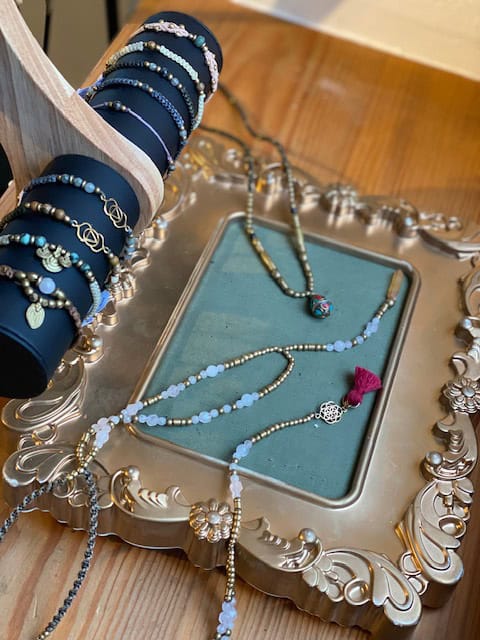
 Delicate bracelets and rings from the Joy Collection by Elmare
The Diversity of Our Jewelry
Our collections at Elmare are characterized by a wide range of designs that are both playful and elegant. We offer delicate jewelry with great attention to detail, which impresses with its uniqueness and appeals to the style-conscious, feminine woman. Our earrings are delicate, playful, and stylish. They are available in various designs, including silver earrings, brass earrings, and feather earrings, all handcrafted and of high quality. Our necklaces are artfully designed and combine fine craftsmanship with expressive designs that have special meaning for their wearer.
We are particularly passionate about creating individual jewelry for brides. Whether delicate, romantic details or striking, characterful accents – we create unique pieces of jewelry that are perfectly matched to the wedding dress and the wearer's personality. This creates lovingly designed unique pieces that not only shine on the wedding day but also serve as a lasting memory of this special moment.
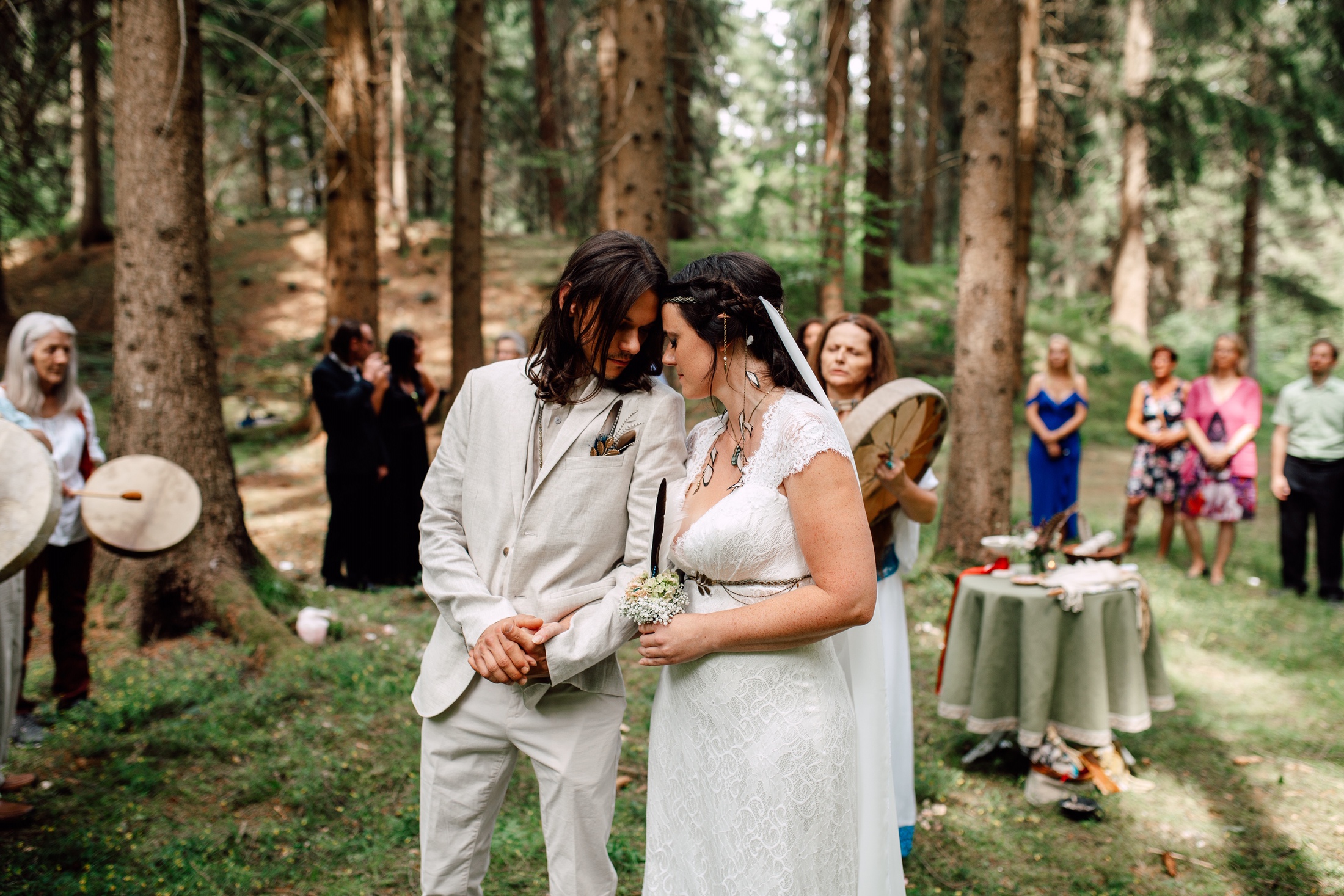 Bridal couple with jewelry from Elmare
The Meaning of Jewelry Through the Ages
Jewelry is far more than just an accessory – it tells the story of humanity. From the first shell necklaces of the Stone Age to the intricate goldsmith works of ancient Egypt and the delicate designs of modernity, jewelry pieces always reflect the cultural, technological, and aesthetic developments of their time. Today, tradition and innovation come together: historical techniques meet modern sustainability, and individual designs give each piece of jewelry a personal meaning. Whether as a sign of love, power, or simply as an expression of one's own personality – jewelry remains a fascinating companion that connects us with the past and at the same time offers a glimpse into the future.
Let the history of jewelry inspire you and find your own timeless piece. ?✨
Your Elmare Team <3